

Technology
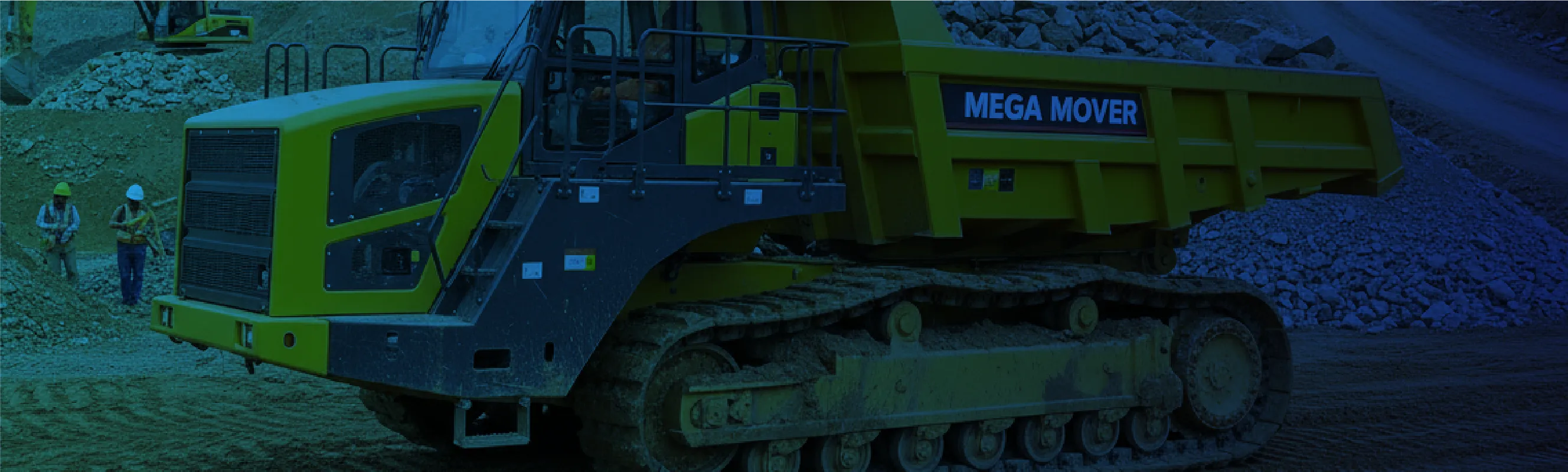
Crawler Carrier
Teleoperation
Supported Models (Based on Past Projects)
Morooka
- MST1000
Please consult us for models not listed.
Control Methods / Equipment
Teleoperation is enabled by installing and controlling actuators/motors on the left/right travel levers and the swing/dump operation levers.
Installed Equipment
Actuators/motors for each operation system, a control computer for Teleoperation, a video processing computer, and indicators are installed in the operator's seat, while communication antennas, warning lights, and cameras are installed on the exterior.
Features
- We support the implementation of Teleoperation for multiple machines on-site through retrofit and multi-manufacturer compatibility.
- Teleoperation functions are implemented via retrofitting without modifying the machinery. *Please check with the manufacturer regarding the impact on periodic voluntary inspections.
- For both MODEL E and V, switching between remote and manned cabin operation is possible simply by toggling a control switch, with no need to remove installed equipment.
- From a safety design perspective, an emergency stop device is provided to immediately stop remote operations in an emergency. The system is also designed to stop Teleoperation if it goes out of the emergency stop device's communication range.
Teleoperable Functions
Basic functions
left/right crawler pedals, swing, dump, emergency stop
Optional functions
please consult if other specific operations are required
Operator Seat Equipment Examples
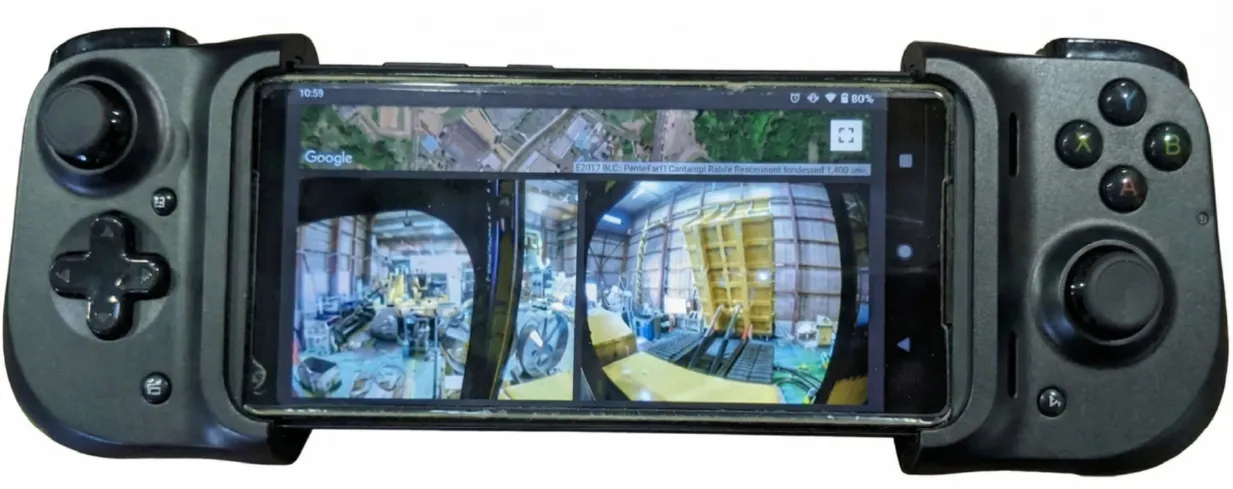
Game controller
Network (Distance)
Operation over ultra-long distances is possible if the communication environment is established.
| Connection distance | Video Latency | Command Latency | |
|---|---|---|---|
| Ver. Long Range | 1,141km | 338ms | 115ms |
| Ver. Short Range | 100km | 261ms | 87ms |
*Results may vary depending on communication environment
FAQ
Number, position and quality of cameras.
A main camera from inside the cabin is the standard installation. We recommend installing an overhead view camera for auxiliary vision. The number and position of cameras can be added or changed upon consultation.
Can the installed equipment be transferred to another machine?
Transfer is technically possible if the model, part number, and year are the same, but adjustments to the mounting equipment will be required. Also, labor costs for removal and re-installation will be incurred.
What kind of network environment is required? Is 5G, Wi-Fi, or another special network needed?
We can support any environment. We implement using the optimal communication environment suited to the site, such as 4G/5G/LTE lines, fiber optics, dedicated communication environments, Wi-Fi, or satellite links.
Are there issues with environmental conditions like heat or cold?
Depending on the environment, special measures for cameras and various devices may be required (e.g., heat-resistant or cold-resistant processing).
Can the customer remove the equipment themselves?
We do not recommend removal by the customer, as specialized knowledge is required for disconnecting wiring and control computers.
How long does installation and removal take?
Our technical team can perform either installation or removal in approximately one business day per unit. Construction may take longer than expected in special environments.
What is the schedule from order to delivery?
We generally require about four months from order to delivery. This varies depending on the construction details, the status of other projects, and the environment.
Is there anything ARAV Inc.'s Teleoperation cannot do?
In principle, we do not support motion seats on the operator side, vibration lever feedback, or operation of in-cabin touch panels.
*Operation of heavy machinery involves inherent risks.
ARAV's systems are assistive technologies and do not replace the customer's responsibility for site safety management and legal compliance.
