

Solution

Civil Engineering
(Tunnels, Roads, Riverbed Excavation)
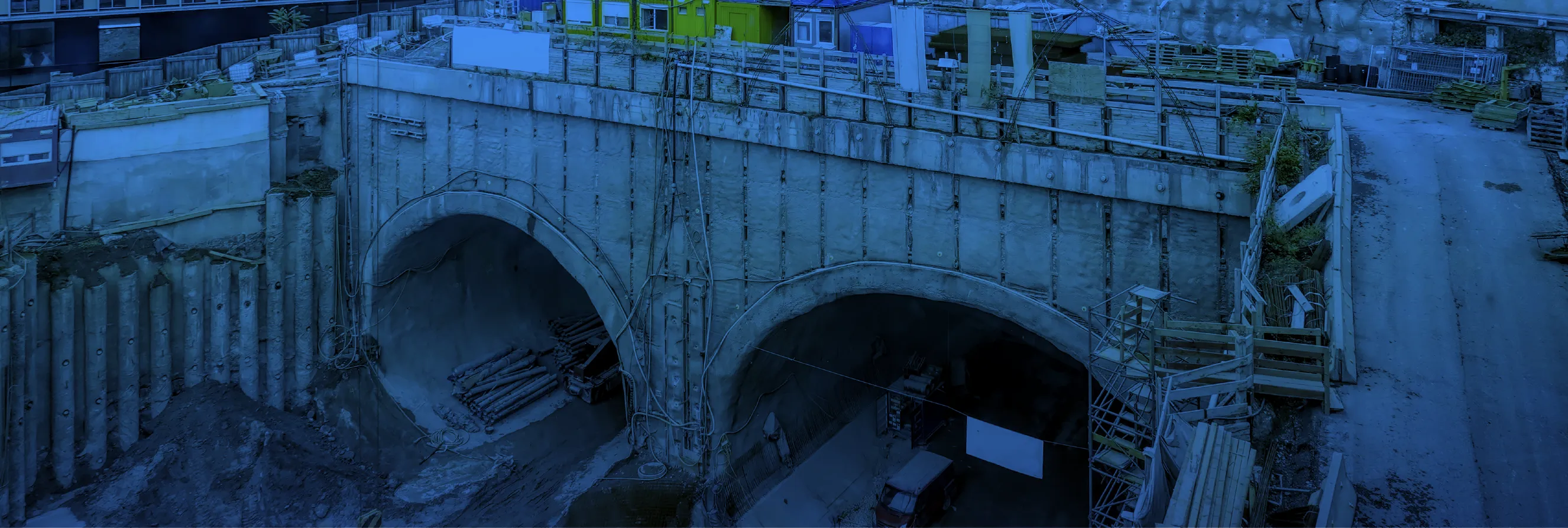
Tunnel construction, road construction, riverbed excavation, etc.
Challenges
Risks at disaster sites and construction sites, work in narrow tunnels, and riverbed excavation with flooding risks—these represent critical points that conventional methods cannot address.
Under "i-Construction 2.0," the Ministry of Land, Infrastructure, Transport and Tourism is promoting labor-saving construction for mountain tunnels and trial projects for remote-controlled excavation.
Automation and remote control technologies using AI and IoT are moving into the implementation stage. Challenges that exceed human limits—such as disaster sites at risk of collapse, narrow and confined tunnels, and excavation in rivers with flooding risks—are solved through remote control and automation.
This is a clear path toward civil engineering sites that balance safety and productivity for the next generation.
ARAV Solutions
We promote site-wide DX for tunnels, roads, and riverbed excavation through teleoperation and automation solutions for construction machinery.
Our goal is not just the DX of a single machine, but to provide a "Field Automation Platform" that optimizes operations across the entire site.
We contribute to dramatically improving safety, maximizing operational efficiency, and enhancing harsh labor environments across the entire site process beyond individual tasks.
Target Processes for Teleoperation and Automation

Promoting Site DX Through Phased Implementation
Example Scenarios
Phase 1
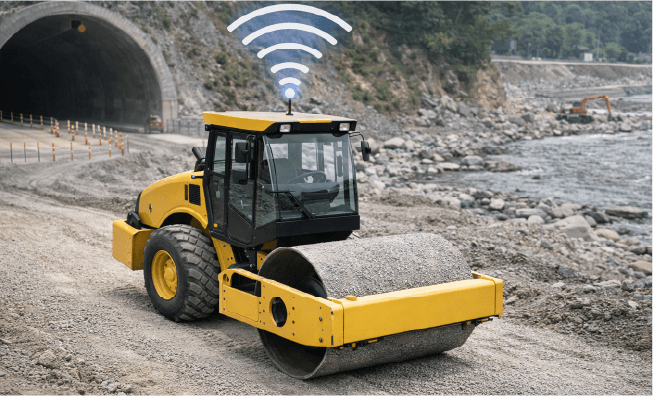
Small Start - Demonstrate value starting with a single unit
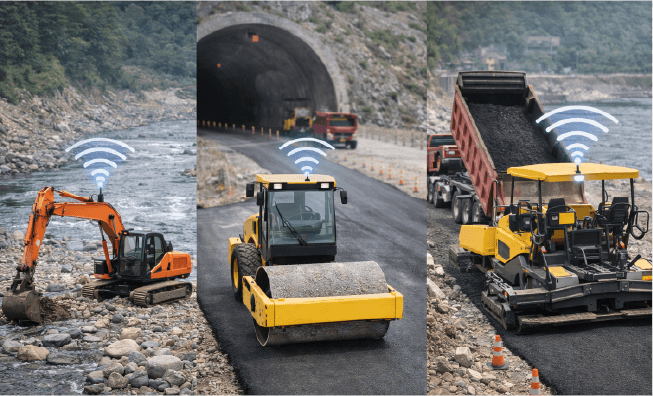
Initially, we support the teleoperation or automation of single units such as wheel loaders, hydraulic excavators, vibratory rollers, and asphalt finishers.
We select tasks with expected challenges based on consultation and site needs. We approach high-risk tasks and heavy workloads in harsh environments, such as work near the face in tunnels, road construction on heights or steep slopes, and riverbed excavation at the water's edge.
Based on the results from a single machine, we propose further DX promotion through future scalability and safety improvements.
Phase 2
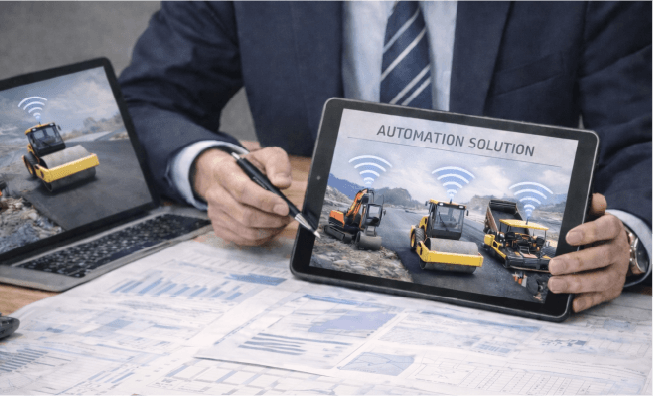
Horizontal Expansion - Scaling to multiple units and proposing automation
After verifying practicality with a single machine, we propose the teleoperation or automation of subsequent units for specific work areas or sites.
[Examples of Benefits by Field]
Tunnel Construction: By teleoperating or automating tasks such as muck removal (loading/transporting excavated soil) with wheel loaders or excavating in pits, operators are isolated from face work filled with dust and gas, ensuring safety and stabilizing construction quality.
Road Construction: Automation of embankment/cutting and subbase leveling avoids fall risks from heights or steep slopes and enables night and early construction.
Riverbed Excavation: Teleoperation of excavation/loading on soft ground or at the water's edge ensures safety and enables early commencement during disaster recovery or flooding.
Phase 3
Final Phase
Our final vision is to further increase the number of teleoperated and automated machines on-site to create unmanned operations and an environment free from constraints of time and location.
We believe this will contribute to resolving labor shortages at civil engineering sites, liberating workers from dangerous tasks, shortening construction periods, and ensuring uniform quality.
We aim for a site-wide DX that cannot be achieved by the automation of single machines alone.