

R&D

Research on Composting Robots by the Smart Livestock Manure Processing Consortium
Overview
What is a Composting Robot?
The composting robot currently under development is the target outcome of a project based on the concept of "enabling robots to perform the composting process automatically."
In this R&D, the robot is defined as an existing, commercially available wheel loader retrofitted with hardware (devices and sensors) and controlled by software to enable autonomous driving.
What is Composting?
Livestock farmers perform the task of converting animal manure into compost. Compost is a fertilizer or soil conditioner in which easily decomposable organic matter has been completely broken down by microorganisms; artificially accelerating this decomposition is called composting.
Research Development
R&D Background
Livestock Farmer Obligations
Livestock manure must be processed appropriately.
While milking robots and auto-sorting for finishing pigs are becoming smart and automated, manure management has not yet advanced in smartification.

Smartification of manure management leads to the smartification of the entire livestock industry; automation allows farmers to focus on livestock care, potentially improving management efficiency.
Action
Implemented self-position estimation (SLAM) using LiDAR for indoor autonomous travel.
Underbody sensors enable stable recognition, and front sensors control bucket positioning.
Installed a rotation angle sensor for articulated angle control to manage distance from walls, line positioning, and steering input.
Completed trials in actual sheds, switching arm/bucket operations for different materials such as high-moisture cow manure and dry sawdust.
Improvement and Re-implementation of Wheel Loader Teleoperation System
Overall Machine
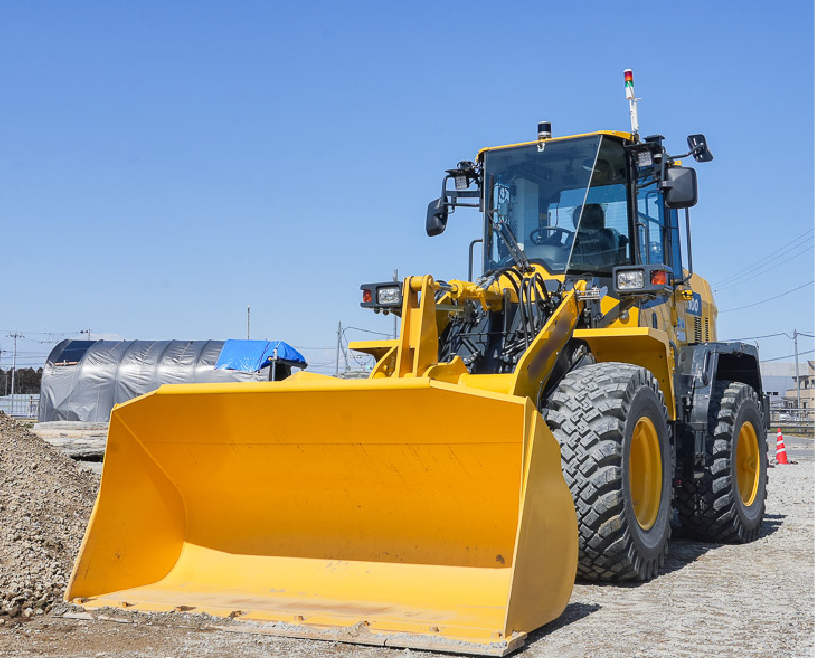
Front
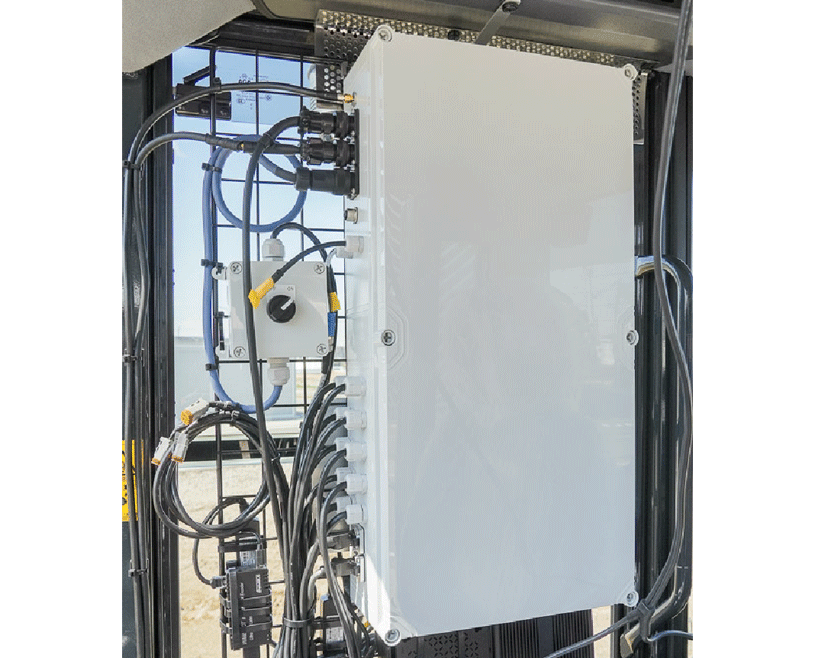
control unit
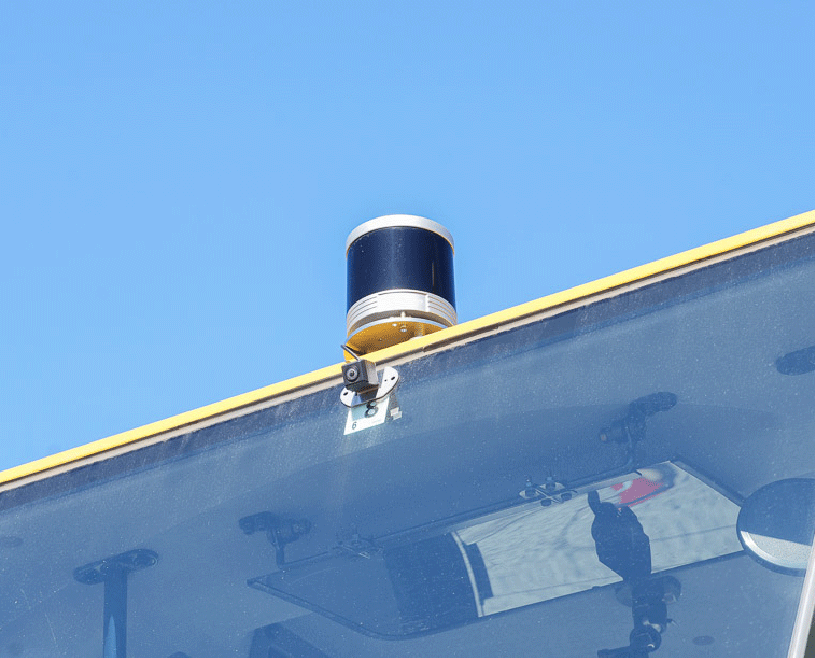
sensors for autonomous travel (top)
Operation Components
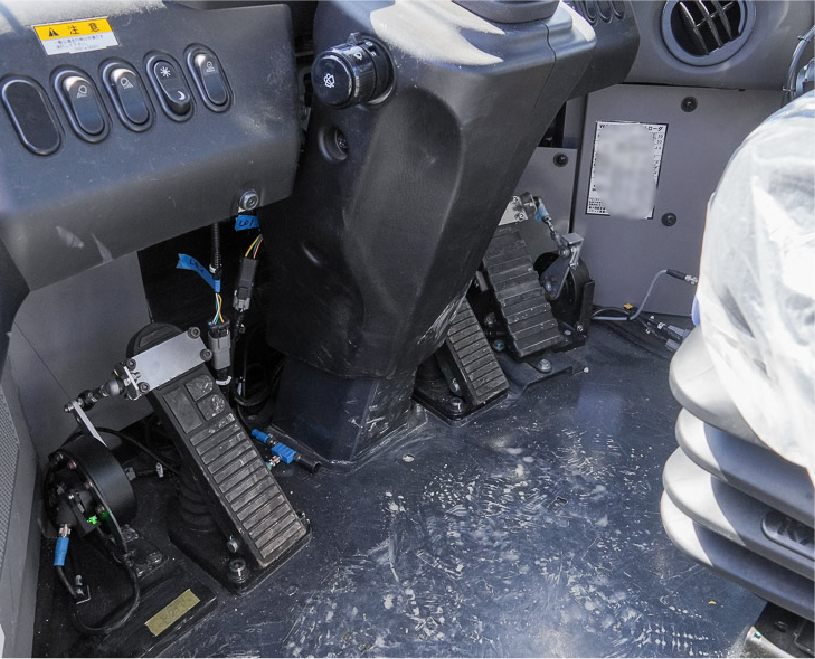
①Pedal operation unit
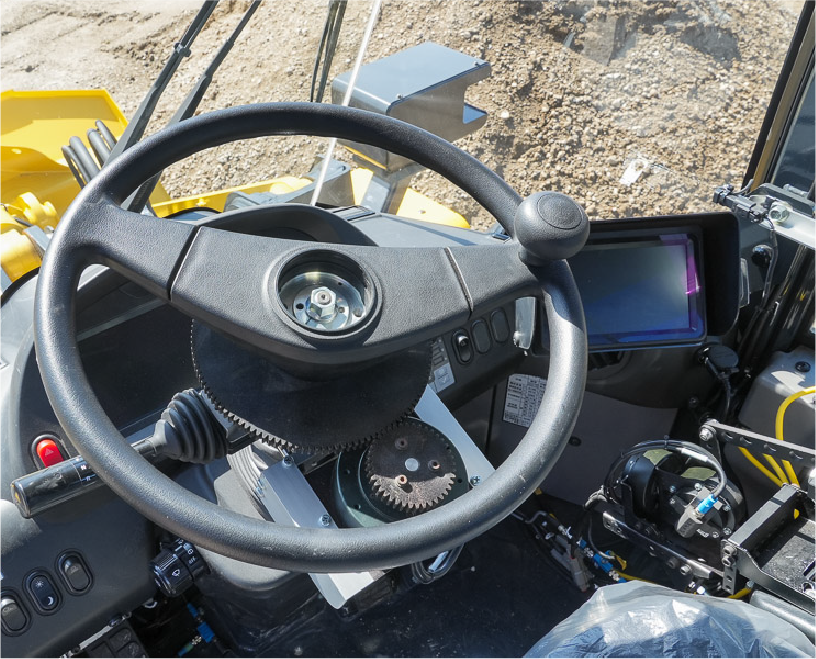
②Steering operation unit
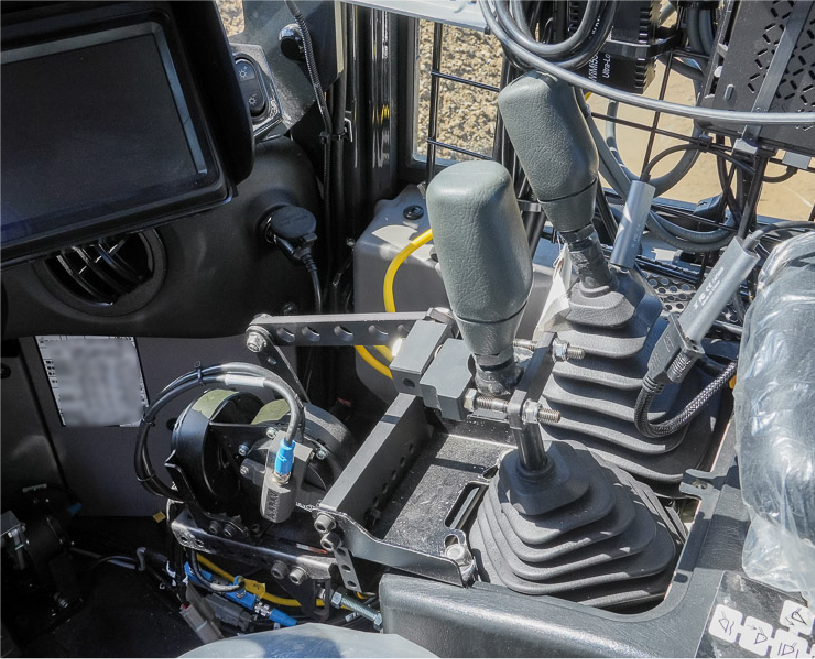
③Joystick operation unit
①Pedal unit:installed control motor and link mechanism
②Steering unit:installed control motor and gear mechanism,
③Joystick unit:installed control motor and link mechanism
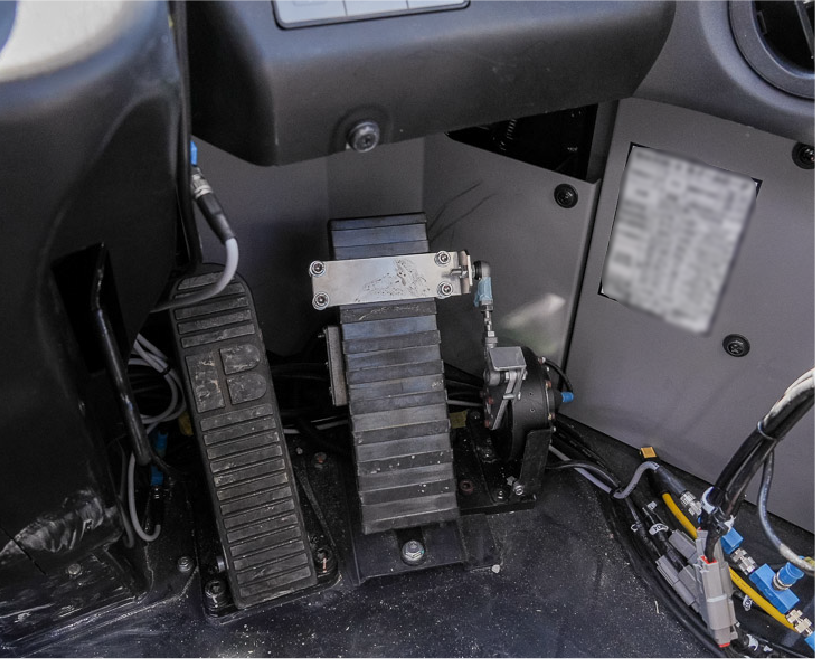
④Accelerator/brake pedals
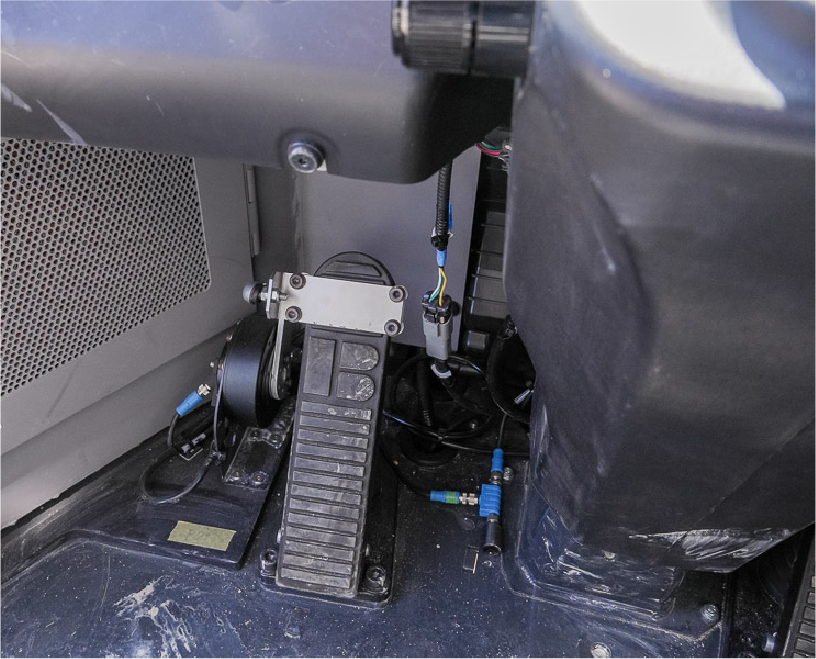
⑤Inching brake pedal
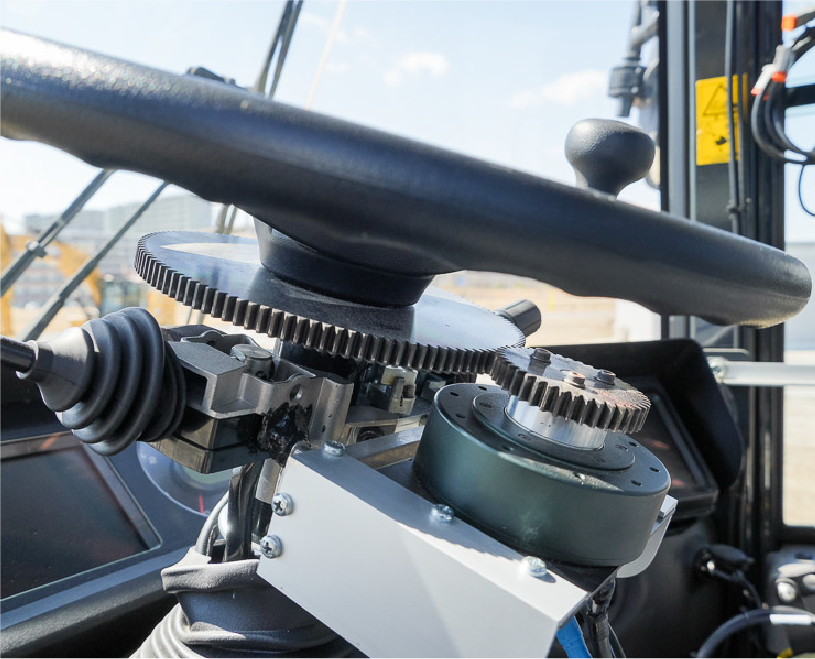
⑥Steering and gear mechanism
④Accelerator/brake:retrofitted motor and link mechanism
⑤Inching brake:retrofitted motor and link mechanism
⑥Steering/gear:retrofitted gear mechanism
Teleoperation Examples
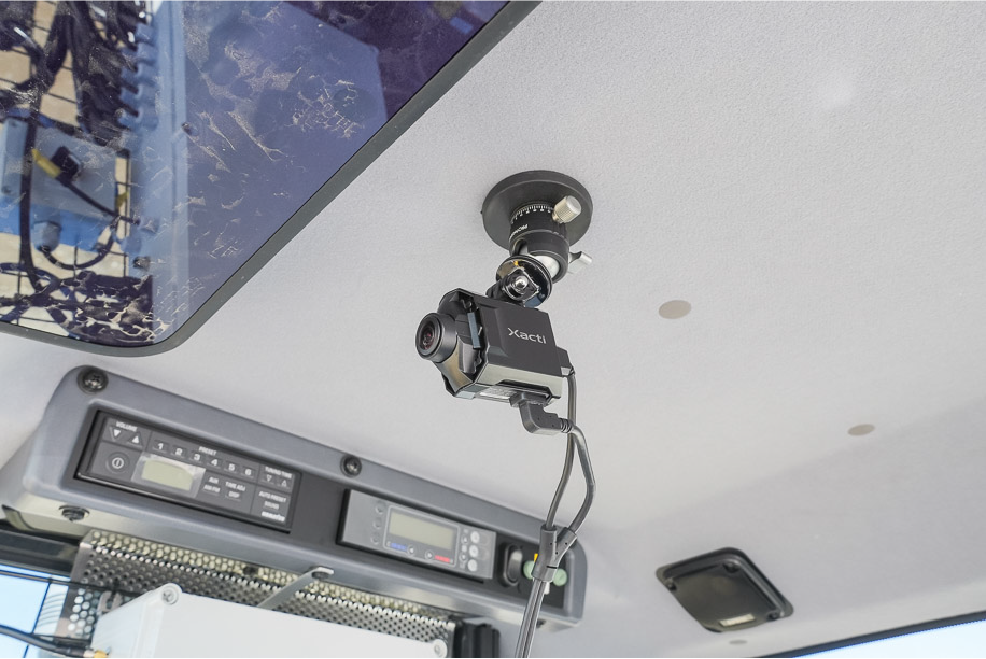
Front view video of the wheel loader
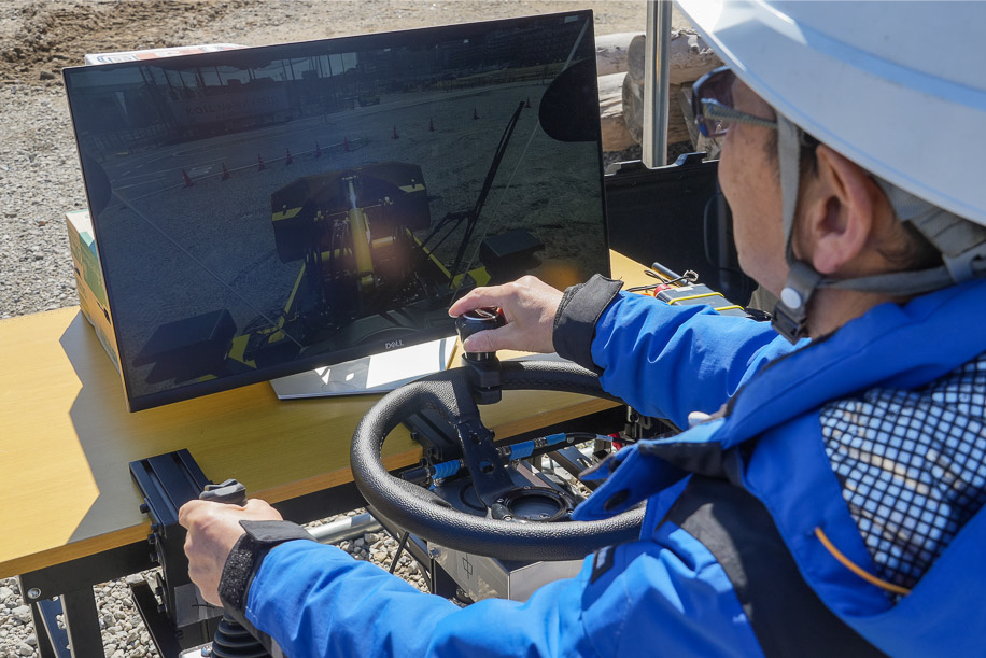
teleoperation scene
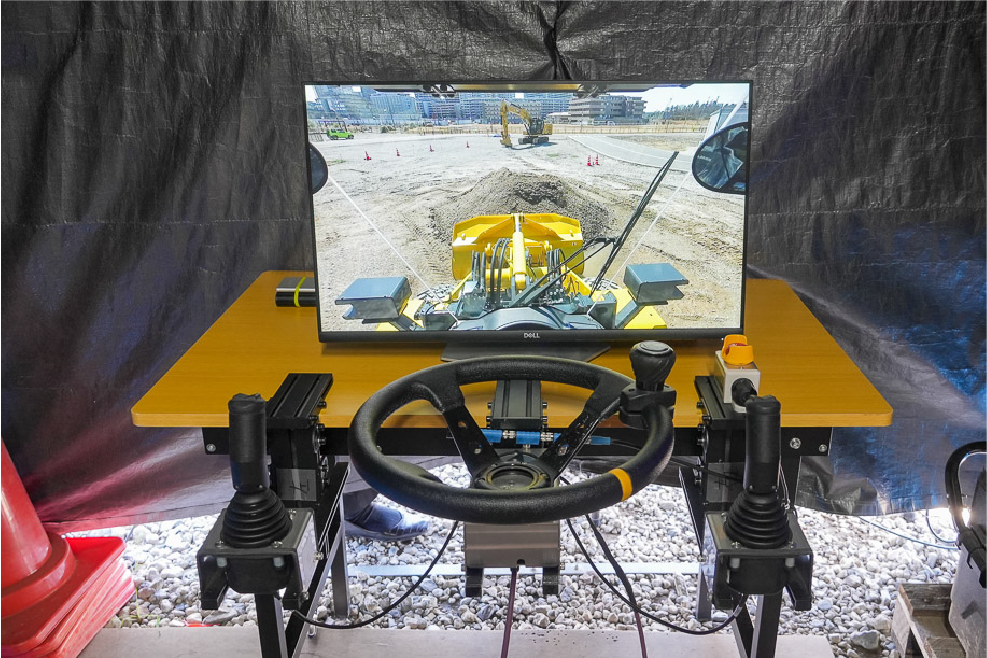
teleoperation seat
Teleoperation:remote control using joysticks and steering based on camera feeds.
Teleoperation seat:equipped with monitors for camera feeds and joysticks/steering for remote control.
Verification of Travel Path Calculation Feature via Simulation

Calculates the travel path from the wheel loader to the scooping position by selecting accumulated compost.

Control functions implemented on ROS refer to the travel path, and the wheel loader advances toward the scooping area.

En route to soil discharge. Afterwards, it reverses to the original position and repeats movement to the scooping position.

En route to soil discharge. Afterwards, it reverses to the original position and repeats movement to the scooping position.
Future Vision Vision
Smartification of livestock farming
"Automating Composting Tasks" and what lies beyond the composting robot project.
Most of the machinery used by livestock farmers for composting is wheel loaders, which were originally developed for use at civil engineering and construction sites.
In fact, the composting robot we are researching and developing in this project also uses a domestically manufactured wheel loader that is already on the market as its experimental base.
ARAV's strength lies in its ability to enable teleoperation and automation of existing wheel loaders—like the one in this project—through the use of retrofit attachments and software.
However, we are also looking toward expanding this to other types of construction machinery, with some implementations like hydraulic excavators already completed.
We believe that by applying the results of this project to other construction machinery or similar equipment used by farmers, it will be possible to bring them closer to smartification through teleoperation and automation.
Livestock Farmer Issues Regarding Composting

Composting is mainly for internal use of manure; cases leading to sales or profit are extremely rare, so it does not necessarily have a positive impact on management.
Proper processing (composting) is mandatory, and managing factors like moisture and aeration incurs facility operational costs, which is a significant challenge.


Proper processing (composting) is mandatory, and managing factors like moisture and aeration incurs facility operational costs, which is a significant challenge.